Perhaps the most impressive thing about the way "A Separation's" exquisitely human situations unfold is that the narration allows for as many points of view as there are characters. Everyone is fallible yet everyone feels justified in their own particular grievances, and the film is at pains not to pick sides. The great French director Jean Renoir, who would have loved this film, exactly sums up its situation in one of his most famous phrases: "The real hell of life is that everyone has his reasons."
Monday, October 01, 2012
Movie recommendation: A Separation [Bryan]
Just saw a wonderful film: A Separation. I can't even begin to detail the rich and intriguing (but not complicated) plot. It is an emotionally powerful ride through family relationships, human motivations, political change, and religious faith. The film creates a messy situation, full of believably complicated characters, and then refuses to tell us who is right. I am a lover of Iranian films, and this is one of the best and most accessible. The reviewer for the LA Times summed it up well:

Sunday, September 30, 2012
The Desperate Love of God: Thoughts on the Worth of a Soul [Bryan]
[Delivered in the Hilliard Ward, Sept. 23, 2012]
How much is a human soul worth? How can we calculate its value? One way would be to try to use a dollar amount. If your body was reduced to its basic elements, Oxygen, Carbon, Hydrogen, Nitrogen, Calcium, and so forth, it is estimated that you would be worth about $160 dollars, most of that value coming from the potassium and sodium. Your potassium, in fact, would account for about 2/3rds of the value of your body’s elements, were it reduced to its basic compounds. So, $160 -- doesn’t seem like much. Link.
Another way to calculate the value of a human life is to think about how much it would take, say, to purchase a slave. How much would it cost to actually own another human being? Based on my research on the Internet, I found that, in 1857, it cost about $1400 dollars to buy a slave in Antebellum American South. That translates into about $25,000 in today’s money. It is interesting, and very troubling, that you could have bought a slave, a human being, for about the cost of an average car today. Link.
What about if we do the sort of cost benefit analysis that is popular today in the business world? Ford Motor Company attempted this back in the 1970s. Ford President Lee Iacocca had stipulated that, in order to compete with the economical Japanese cars that were coming in the market, he wanted to design a car that would weigh less than 2,000 pounds and that would be priced at less than $2,000. This idea became the legendary Ford Pinto. There was one major and tragic flaw with the Pinto’s original design, a flaw that cost dozens of lives. In the event of the rear end collision, even at low speeds, the gas tank would be pushed forward and punctured by the protruding bolts of the differential. Gasoline would come pouring out, explosions would occur, and people would be in danger of dying a fiery death. When Ford discovered this problem during the initial crash tests, they did a cost benefit analysis. They found a solution to the problem that cost $11 per car. Overall, the cost to redesign and rework the Pinto's gas tank, at that late stage, would cost about $137 million. Ford experts then calculated that they could be held liable for $200,000 per traffic fatality. Using an estimate of 180 deaths and 180 serious burns, Ford calculated that their possible liability costs worked out to around $49 million. So, because the $137 million cost to fix the problem was greater than the 49 million in liability, they, tragically and infamously, decided not to fix the Pinto. Many people died or were severely burned. So, in this sad story, there is another estimate of a human life: $200,000. Link.
Yet another way to think about your worth as a human being to to think how much your individual organs are worth. There is, unfortunately, a thriving black market for human organs throughout the world. Turns out that a human heart is worth $290,000 in South Korea, where a human liver is also worth $290,000. A kidney is worth $145,000 in Turkey, and a pancreas is worth $140,000 in Singapore, where a lung also sells for $290,000. Link. According to a recent article in Wired magazine, a full human body could be worth up to $45 million if we sell the bone marrow, DNA, lungs, kidneys, heart, etc., as separate components. I, for one, will be worth more money dead than I every will be alive!
Now, none of this has been particularly pleasant to think about. That discomfort stems from our moral issues, I think, with the thought of buying a slave, doing a cost benefit analysis on a human life, selling body parts on the black market, and so forth. But our discomfort is more than that. I think we sense that the value of a human life is being missed in these calculations. In the D&C 18:10, we read that we should “Remember the worth of souls is great in the sight of God.” This begins to tell us something about our worth as human beings. Is there a way, though, we can get a more precise sense of this worth? Is there a way we can feel it on a more gut level, with more emotional punch.
To get this sort of glimpse of the worth of a soul, I want to turn to three stories from the New Testament, three parables, that deal with this same topic. The text that I wish to focus on is the 15th chapter of the Gospel of Luke.
In the beginning of this chapter, we are given the setting in which these three parables are told. Picture the scene: Jesus is teaching. A group of sinner and publicans (who were basically seen as traitors to Israel) approach him. This group is the lowest of low on the Israelite social ladder. They are the outcast and despised. And what does Jesus do? We are told only that Pharisees and scribes start to complain, saying, this man “receives sinners and eats with them.” It is in response to this complaint that Jesus offers to the Pharisees three famous parables. Start in verse four:
4 What man of you, [he asks] having an hundred sheep, if he
lose one of them, doth not leave the ninety and nine in the wilderness, and go
after that which is lost, until he find it?
5 And when he hath found it,
he layeth it on his shoulders, rejoicing.
6 And when he cometh home, he calleth together his friends and neighbours, saying unto them, Rejoice
with me; for I have found my sheep which was lost.
I love this striking and intimate imagine, the image of a shepherd
laying the lost sheep on his shoulders, cradling it, carrying back to safety,
to home. I hope that we can all remember this image in those times when we have
wandered or are lost, times when we feel alone, or afraid. In those times, the
parable asks us to imagine a shepherd gently putting his arms around us, stroking us softly, lifting us up to his shoulders, and carrying us back
to safety. How much is a human soul worth? Well, think of that beautiful image,
the shepherd going out into the wilderness, gently carrying back the one lost sheep.
Imagine that shepherd calling for a celebration. That intimate imagine suggests
how much we are worth.
Another parable:
8 ¶Either what woman having ten pieces of silver, if she
lose one piece, doth not light a candle, and sweep the house, and seek
diligently till she find it?
9 And when she hath found it, she calleth her
friends and her neighbours together, saying,
Rejoice with me; for I have found the piece which I had lost.
Notice in
this story, the woman seems to lose the coin at night. Notice that she doesn’t
wait until morning to search. She lights a candle. She is so desperate to find
this coin that she stays up all night, sweeping, desperately looking for it!
Now, I
want you to think of times in your life when you have lost something important,
something that simply could not be lost. Try to remember how you felt. I think
of a time on my honeymoon. Ellie and I went on our honeymoon to San Diego California. We had a wonderful time, staying in a resort
right next to the beach, going to parks and museums, starting out our married
adventure together. I remember feeling in those early days that I wanted to
show to everyone, particularly Ellie, that I could be competent husband, and
that Ellie hadn’t made a huge mistake marrying me. On our last day in San
Diego, we decided to take one more romantic walk on the beach, young newlyweds
without a care in the world. As we walked back to the hotel to check out, I
reached in my back pocket and found, to my horror and embarrassment, that my
wallet was missing. Everything I needed was in that wallet, my credit cards, my
money, my identification to get on the flight that would take us home, a flight
leaving in less than two hours. More than that, in that wallet was my very
credibility, my chance to be seen as a competent husband. I sprinted back to
the beach, frenziedly, frantically, perhaps even hysterically, a wave of
desperation washing over me. I can imagine that this is how the women in the
parable felt, staying up all night seeking for this coin.
I should
note that, however frantic I felt in that moment, it is nothing compared to the
times when we have briefly lost children in busy public places. Those of you
who have lost your children know the feeling: That frantic desperation. And
when you find a lost child, you can understand the relief that is also captured
in these stories. You can understand why someone would want to have a party, a
celebration, when what was lost has been found.
Think,
then, about that moment when you lost something, something that simply could not be
lost. Recreate in your minds and hearts the feelings that you experienced as
you were looking for it. And think about the relief you felt when
you found it, or the sorrow you felt when realized it was gone forever.
Recreate in your mind that sense of desperate desire, that terrible emotion, the emotion that keeps us up all night looking for something, that emotion
that gets us sprinting back to the beach.
In those
emotions, we can begin to understand, on a gut level, the true worth of the
soul. That frantic feeling to find that which was lost? That is the worth of
the soul. That unforgettable relief and joy when you found it, a joy worth
celebrating? That is what you are worth. In these stories, we are being told
that this desperate love is how God seeks for us when we are lost. That is the answer.
Recall
the setting in which Jesus told this story. Think about what Jesus is saying
here to these complaining Pharisees, as he tells these stories. It is as if
Jesus is saying, “You think it is bad that I am sitting down and eating with
these publicans and sinners. Well, you should know: not only will I eat with
these sinners and outcasts, these lost souls, I desperately love them with a
love you cannot understand. I would stay up all night looking for them with a
candle clenched in my worried hand. I would go out into the wilderness alone
looking for them, carrying them back rejoicing on my shoulders. That is how
much I love them.” I can only imagine how scandalous that message would have
been to the Pharisees. Jesus not only eats with these sinners, he desperately
cares for them!
Some of
you may know the story of The Giving Tree, a book by Shel Silversteen. I love
this story. I must admit, however, that I actually have a complicated
relationship with it (I guess it shows how weird I am to have a complicated
relationship with a children’s book). The story goes like this:
Once, there was a tree…
And she loved a little boy.
And every day the boy would come
And he would gather her leaves
And swing from her branches
And eat apples
And they would play hide-and-go-seek.
And when he was tired, he would sleep in her shade.
And the boy loved the tree… very much…
And the tree was happy.
And she loved a little boy.
And every day the boy would come
And he would gather her leaves
And swing from her branches
And eat apples
And they would play hide-and-go-seek.
And when he was tired, he would sleep in her shade.
And the boy loved the tree… very much…
And the tree was happy.
But time went by,
And the boy grew older.
And the tree was often alone.
Then, one day, the boy came to the tree and the tree said:
"Come, Boy, come and climb up my trunk and swing from my branches and eat apples and play in my shade and be happy!"
"I am too big to climb and play," said the boy. "I want to buy things and have fun. I want some money.Can you give me some money?"
"I’m sorry", said the tree, "but I have no money. I have only leaves and apples. Take my apples, Boy, and sell them in city. Then you will have money and you’ll be happy."
And so the boy climbed up the tree and gathered her apples and carried them away.
And the tree was happy…
And the boy grew older.
And the tree was often alone.
Then, one day, the boy came to the tree and the tree said:
"Come, Boy, come and climb up my trunk and swing from my branches and eat apples and play in my shade and be happy!"
"I am too big to climb and play," said the boy. "I want to buy things and have fun. I want some money.Can you give me some money?"
"I’m sorry", said the tree, "but I have no money. I have only leaves and apples. Take my apples, Boy, and sell them in city. Then you will have money and you’ll be happy."
And so the boy climbed up the tree and gathered her apples and carried them away.
And the tree was happy…
The story
continues. The boy comes back again and again, asking more and more from the
tree. He takes her apples and branches. Finally, the story says the boy was
away for a long time. He returns again and makes the ultimate demand of the tree.
And when he came back, the tree was so happy she could hardly speak.
"Come, Boy," she whispered, "Come and play."
"I am too old and sad to play," said the boy. "I want a boat that will take me away from here. Can you give me a boat?"
"Cut down my trunk and make a boat," said the tree. "Then you can sail away… and be happy."
And so the boy cut down her trunk
And made a boat and sailed away.
And the tree was happy…
But not really.
"Come, Boy," she whispered, "Come and play."
"I am too old and sad to play," said the boy. "I want a boat that will take me away from here. Can you give me a boat?"
"Cut down my trunk and make a boat," said the tree. "Then you can sail away… and be happy."
And so the boy cut down her trunk
And made a boat and sailed away.
And the tree was happy…
But not really.
And after a long time the boy came back again.
"I am sorry, Boy," said the tree, "but I have nothing left to give you – My apples are gone....My branches are gone....My trunk is gone"
"I am sorry, Boy," said the tree, "but I have nothing left to give you – My apples are gone....My branches are gone....My trunk is gone"
"I am sorry," sighed the tree. "I wish that I could give you
something… but I have nothing left. I am just an old stump. I am sorry…"
"I don’t need very much now,” said the boy. “Just a quiet place to sit and rest. I am very tired."
"Well," said the tree, straightening herself up as much as she could, "well, an old stump is good for sitting and resting. Come, Boy, sit down… sit down and rest."
And the boy did.
And the tree was happy…
"I don’t need very much now,” said the boy. “Just a quiet place to sit and rest. I am very tired."
"Well," said the tree, straightening herself up as much as she could, "well, an old stump is good for sitting and resting. Come, Boy, sit down… sit down and rest."
And the boy did.
And the tree was happy…
If you go
on the Internet, there is actually a heated debate about the merits of this book.
Some have said that this actually isn’t a very good story. I have thought such
things myself – hence my complicated relationship with the book. In the story a
tree gives all that she has without asking anything in return or getting
anything from the relationship. The boy: he takes and takes and takes. The
tree: she gives and gives and gives. She seems exploited, a doormat, letting
the boy walk all over her. Why should we find admirable what the tree gives
here?
For an
answer, let’s return to Luke 15.
11 ¶And [Jesus] said, A certain
man had two sons:
12 And the younger of them said
to his father, Father, give me the portion of
goods that falleth to me. And he divided unto
them his living.
13 And not many days after the
younger son gathered all together, and took his journey into a far country, and
there wasted his substance with riotous living.
It is
important to read this story in the way they would have read it in the ancient
world. The key point is that the son is insulting his father in a way we cannot
comprehend. The father isn’t even dead, and the younger son is already asking
his inheritance. He is basically saying, “Father, you are dead to me.” Just as
bad is how the boy so quickly leaves and wastes the money. He goes off to a
“far country,” which I read as symbolic of leaving the covenant people, leaving
the church, and he goes and lives in a riotous way. He is using his father’s
estate in a way that goes against everything the father stands for. The
audience hearing this story in Jesus’s time would have thought that this son
deserves only punishment and shame. That and nothing more.
The son
heads off, wasting the money on wine and women. He falls are hard times. He
realizes that he would be better off as a slave to his father. Notice the story
never says the son felt bad for what he did and how he treated his father. He rehearses a self-serving little speech that he is going to give his
father when he returns. The
son remains selfish, thinking only of himself. “The father is going to beat
this son senseless when he comes home!,” the audience begins to think.
But, of
course, this is not what happens. You remember how the author of Luke recounts the story:
“But when he was yet a great way off, his father saw him, and had compassion,
and ran, and fell on his neck, and kissed him.” The father seems to have been
anxiously waiting for any sign of his son, waiting literally by the window, so
that he sees him from a distance. Like me frantically sprinting back to the
beach, the father frantically sprints to his lost son. He has lost something of
inestimable value. He is experiencing that frantic desire of the woman looking
for the coin. Instead of beating his son, the son is embraced; instead of
giving the son what he deserves, the son is given compassion and mercy; instead
of stern words, the son is given tenderness, kindness, forgiveness; instead of
anger, the father kisses the son on his neck. The father responds with an
almost irrational love: “It was meet that we should make merry, and be glad:
for this thy brother was dead, and is alive again; and was lost, and is found.”
How much
is a human soul worth? I believe that, to understand the worth of the human
soul, on a gut level, there are three images to remember. I want you to
remember the image of the lost sheep, alone and frightened in the wilderness,
cradled in the arms of the shepherd, lifted on his shoulders. I want you to
remember the woman searching all night, frantically and desperately, trying to
find her lost coin. I want you to remember the father, who had been so despised
and insulted by his son, who still waits anxiously by his window, waiting for
his son to come home. I particularly want you to remember these images when you
feel lost or alone, when you feel nobody cares, when you feel like you’ve made
mistakes, when you feel unloved.
How much
is a human soul worth? A gentle lift in the wilderness to safety, a frantic
search at night, a tireless vigil by the window. Remember these images and,
most of all, remember the image of a Heavenly Father, who loved the world, who
loved you, so much that he sent his son, to suffer and to die. I bear testimony
of this love.
(For the link between the Giving Tree and the Prodigal Son, I am indebted to: http://andrewsullivan.thedailybeast.com/2011/04/the-sacrificial-tree.html)
Monday, September 03, 2012
Authoritative Parenting [Bryan]
Below is some recent research on parenting. The endorsement of "authoritative parenting" is not particularly new, and I'm not sure the difference between these types of parenting is as clear in practice as we might like, but it is interesting nonetheless:
Authoritarian parents are more likely to end up with disrespectful children who engage in delinquent behaviors, the study found, compared to parents who listen to their kids with the goal of gaining trust.
It was the first study to look at how parenting styles affect the way teens view their parents and, in turn, how they behave.
The study considered three general styles of parenting. Authoritative parents are demanding and controlling while also being warm and sensitive to their children’s needs.
Authoritarian parents, by contrast, are demanding and controlling without those compassionate layers of caring, attachment and receptiveness. They take a "my way or the highway" approach to their kids.
Permissive parents, the third group, have warm and receptive qualities, but they define few boundaries and enforce few rules.
Using data on nearly 600 kids from an ongoing study of middle school and high school students in New Hampshire, researchers from the University of New Hampshire were able to link "my way or the highway" parenting with more delinquency in kids -- measured in behaviors like shop-lifting, substance abuse and attacking someone else with the intention of hurting or killing.
Firm but loving parenting, on the other hand, led to fewer transgressions. Permissive parenting, surprisingly, didn't seem to make much of a difference either way.
Friday, August 31, 2012
#InvisibleObama [Bryan]
Clint Eastwood at RNC: Instant classic. But probably not for the reason Romney hoped.


Friday, May 25, 2012
Surviving the Titanic [Bryan]
So, why didn't the folks in the Titanic just hop on the iceberg? Functional fixedness!
The most famous cognitive obstacle to innovation functional fixedness — an idea first articulated in the 1930s by Karl Duncker in which people tend to fixate on the common use of an object. For example, the people on the Titanic overlooked the possibility that the iceberg could have been their lifeboat.
Newspapers from the time estimated the size of the iceberg to be between 50-100 feet high and 200-400 feet long. Titanic was navigable for awhile and could have pulled aside the iceberg. Many people could have climbed aboard it to find flat places to stay out of the water for the four hours before help arrived. Fixated on the fact that icebergs sink ships, people overlooked the size and shape of the iceberg (plus the fact that it would not sink).
Thursday, May 24, 2012
Mormon Cuisine
I've been busy lately, but I think I can resume some measure of blogging at this point. I've been meaning to point readers to an article on "Mormon Cuisine" that was published in the NY Times a few months ago. It discusses the history of why we eat like we do (focused on Jello and other convenience foods) and why things are changing (e.g., missionaries gaining a fondest for foreign cuisine in far off locales.)
I also loved this description of funeral potatoes.Mormonism is a young religion, born in the 1830s, leaving little time for food traditions to evolve. Its food doesn’t reflect one particular ethnic identity, or a region other than the Wasatch Front....Food was rarely plentiful in the early years, families were large, and all households tithed at least 10 percent to the church, so women were strongly encouraged to develop cooking and budget-management skills. Being industrious and hardworking is highly prized in Mormon culture (the beehive is a symbol of the church), and for women, cooking provides a real sense of identity and daily purpose.In the 1960s, Mormon women (like most Americans) enthusiastically embraced inexpensive convenience foods like canned fruit, instant potatoes and, of course, Jell-O. “For some reason, the Utah Mormons took longer to come out of that phase,” said Christy Spackman, 34, a doctoral student in food studies at N.Y.U.Ms. Spackman says that in her congregation, in Brooklyn, the tradition of socializing with food and sharing recipes is just as strong as it was when she was growing up in Logan, Utah. Only the recipes have changed. “Now the recipe is more likely to be a grapefruit curd or a new kind of granola bar than a casserole,” she said. Recipes, like one for homemade yogurt, “spread like wildfire” in the community, she said.Many Mormon men and some women spend two years abroad working as missionaries — a custom that has given many a lingering taste for kimchi or Camembert. In Brazil, Mrs. Wells discovered a passion for dulce de leche, mangoes and black beans.
Funeral potatoes, a rich casserole of grated potatoes, sour cream, cheese and cream-of-something soup, is delivered to the bereaved, and serves as a side dish for ham on Christmas and Easter. It tastes like the inside of a baked potato mashed with plenty of sour cream and Cheddar, and it takes only one savory, fluffy forkful to see why the dish is a classic. (During the 2002 Olympics in Salt Lake City, visitors found these dishes so pervasive that souvenir pins shaped like cubes of green Jell-O and casseroles of funeral potatoes became hot sellers.)Is it lunch time, yet?
Friday, February 24, 2012
Death Star Economics [Bryan]
Would the death star be economically feasible? Kevin Drum says yes:
There's been a lot of loose talk about the Death Star lately. I want to put it into a bit of perspective.
As background, some students at Lehigh University have estimated that it would be a very expensive project. The steel alone, assuming the Death Star's mass/volume ratio
is about the same as an aircraft carrier, comes to $852 quadrillion, or 13,000 times the world's GDP. Is this affordable?
Let's sharpen our pencils. For starters, this number is too low. Using the same aircraft carrier metric they did, I figure that the price tag on the latest and greatest Ford-class supercarrier is about 100x the cost of the raw steel that goes into it. If the Death Star is similar, its final cost would be about 1.3 million times the world's GDP.
But there's more. Star Wars may have taken place "a long time ago," but the technology of the Star Wars universe is well in our future. How far into our future? Well, Star Trek is about 300 years in our future, and the technology of Star Wars is obviously well beyond that. Let's call it 500 years. What will the world's GDP be in the year 2500? Answer: assuming a modest 2% real growth rate, it will be about 20,000 times higher than today. So we can figure that the average world in the Star Wars universe is about 20,000x richer than present-day Earth, which means the Death Star would cost about 65x the average world's GDP.
However, the original Death Star took a couple of decades to build. So its annual budget is something on the order of 3x the average world's GDP.
But how big is the Republic/Empire? There's probably a canonical figure somewhere, but I don't know where. So I'll just pull a number out of my ass based on the apparent size of the Old Senate, and figure a bare minimum of 10,000 planets. That means the Death Star requires .03% of the GDP of each planet in the Republic/Empire annually. By comparison, this is the equivalent of about $5 billion per year in the current-day United States.
In other words, not only is the Death Star affordable, it's not even a big deal.
Thursday, February 16, 2012
Tim vs. Jeremy [Bryan]
So, apparently the new sports crush is New York Knick point guard Jeremy Lin. I can't say I'm not also caught up in the hype: from what I have seen, Lin is great fun to watch and cheer for. Of course, we now get the inevitable comparisons to Tim Tebow. I have nothing against Tebow. He seems like a decent kid. There is no real comparison, though, in their respective Cinderella stories. This sums it up:
Tim Tebow’s commercials and personal branding speak about how everyone has always doubted him, but in reality, he’s has every privilege and advantage. He was home-schooled but was still allowed to play Florida high school sports. He was allowed to play in a college spread offense built around his rather unique skill set. He was drafted in the first round even though many scouts saw him as a mid- to high-round project. He is treated like an All-American superstar even without the game to back it up....Tim Tebow had the benefit of the doubt. Jeremy Lin was just doubted.
Sunday, February 05, 2012
Life according to Stephen [Bryan]

Our son, Stephen, seems to have entered the stage of perfect cuteness. Not a day goes by when he doesn't say something clever. And his hair is just a curly mess of wonderful blond tangles. We can't bring ourselves to cut it.
Some recent stories:
Ellie went in after Stephen's nap to find that he had gotten out his old white diapers and spread them all across the floor of his bedroom. Ellie, shocked at the mess, asked him what he'd been doing. "It's snow, Mom," he said.
We were eating dinner the other night. Conversation was lagging a bit. Suddenly, Stephen pipes up, "Mom, are you thinking what I'm thinking?" We're not sure where he got that, but it was hilarious to be asked that by a two-year-old. We concluded that, no, we probably weren't thinking what he was thinking.
I was in the bathroom today getting ready. Stephen marches in and points at the shower. "What's that, Dadda?" he asks. "Um, that's the shower, buddy." I reply. He says, matter-of-factly, "That's where it rains." True, Stephen, true.
Friday, February 03, 2012
Ode to underground London [Bryan]
Sorry about the lack of posting lately -- still trying to navigate my new identity.
Anyway, a mesmerizing video below of the London Tube. For some reason, I love to watch people in transit. It is always interesting to think about who they are and where they are going. Also, there is some great footage of a guy in a bow tie.
Anyway, a mesmerizing video below of the London Tube. For some reason, I love to watch people in transit. It is always interesting to think about who they are and where they are going. Also, there is some great footage of a guy in a bow tie.
Oyster Hunt from Garreth Carter on Vimeo.
Tuesday, December 20, 2011
Year in review [Bryan and Ellie]
A number of exciting things have happened to 8-year-old Nora in 2011. In the spring, both her grandparents were able to come to Ohio for her baptism. The baptism was a very sweet experience, and we were so grateful to have family there to share it with us. In the summer, Nora swam in our favorite lake and took tennis lessons. In fall, she started her gifted class (“Fun--like preschool!”(?)), continued piano, and kicked her first two goals in soccer. These goals were a long time in coming, so her father can be excused for jumping up and down and screaming like a maniac. Finally, Nora moved down to the new basement in a room all her own. She is in heaven.
Andrew is eagerly awaiting his 6th birthday this month. His big news is that he started Kindergarten, which he loves. He’s also taking pre-piano music class this year. Andrew lost his first tooth in Utah at his Warnick Grandparents’ home this summer. Our Tooth Fairy still found him, so she won’t be fired, despite her sometimes flighty and forgetful ways. His drawings of semi trucks, buses, airplanes, and Jeeps decorate our fridge and the fridges of his teachers and grandparents. Andrew is the resident rule-enforcer in our home, much to his sister’s chagrin. Not much is missed by his penetrating, petty-criminal-bustin’ gaze.
Stephen, at two, shifts rapidly between unbearably cute and just unbearable. On the cute side, we have his claims of having a beard (we think he means his upper lip), his love of hugs, his somersault attempts, his obsession with writing his name, and his big brown eyes and blond curls. On the unbearable side we have the typical toddler whining and tantrums in addition to the messiest eating we have ever experienced. (He is not done until he has pulverized every cubic inch of his food, and has eaten. . .any?) Stephen provides the comic relief in our family. The past few weeks, he’s taken to answering every question, “Yes, sir!”
Ellie and Nora joined a Mother-Daughter Book Club this year, and have had a great time reading and discussing some childhood classics together. In March, Ellie tagged along with Bryan to England for a conference at Oxford. (Thanks to the Merkley grandparents for making this childless trip possible!) Going to England has been a lifelong dream for Ellie, and she loved every minute--even the one where she mistook white wine for water (low lighting!), took a big swig, and just about spit it across the table onto Bryan’s distinguished British colleagues. She’s still running, albeit a little more slowly to keep pace with her favorite pregnant running buddy (sister Anna).
Bryan was consumed early this year with finishing the basement. He put up the drywall, sanded, hung the doors, put up the wood trim, and painted. He is pleased with how it all turned out and can often be found in the basement admiring his craftsmanship. Meanwhile, he gave professional presentations in St. Louis and Oxford, organized a conference in Dayton, spearheaded a major curriculum change in his college, published two papers, and finalized a publisher for his second book. He has recently become fascinated with wood-grilling. His peaceful and quiet life was abruptly interrupted last week by a new church assignment...bishop (a lay leader of a local LDS congregation). Time will tell if he survives to see next Christmas.
Andrew is eagerly awaiting his 6th birthday this month. His big news is that he started Kindergarten, which he loves. He’s also taking pre-piano music class this year. Andrew lost his first tooth in Utah at his Warnick Grandparents’ home this summer. Our Tooth Fairy still found him, so she won’t be fired, despite her sometimes flighty and forgetful ways. His drawings of semi trucks, buses, airplanes, and Jeeps decorate our fridge and the fridges of his teachers and grandparents. Andrew is the resident rule-enforcer in our home, much to his sister’s chagrin. Not much is missed by his penetrating, petty-criminal-bustin’ gaze.
Stephen, at two, shifts rapidly between unbearably cute and just unbearable. On the cute side, we have his claims of having a beard (we think he means his upper lip), his love of hugs, his somersault attempts, his obsession with writing his name, and his big brown eyes and blond curls. On the unbearable side we have the typical toddler whining and tantrums in addition to the messiest eating we have ever experienced. (He is not done until he has pulverized every cubic inch of his food, and has eaten. . .any?) Stephen provides the comic relief in our family. The past few weeks, he’s taken to answering every question, “Yes, sir!”
Ellie and Nora joined a Mother-Daughter Book Club this year, and have had a great time reading and discussing some childhood classics together. In March, Ellie tagged along with Bryan to England for a conference at Oxford. (Thanks to the Merkley grandparents for making this childless trip possible!) Going to England has been a lifelong dream for Ellie, and she loved every minute--even the one where she mistook white wine for water (low lighting!), took a big swig, and just about spit it across the table onto Bryan’s distinguished British colleagues. She’s still running, albeit a little more slowly to keep pace with her favorite pregnant running buddy (sister Anna).
Bryan was consumed early this year with finishing the basement. He put up the drywall, sanded, hung the doors, put up the wood trim, and painted. He is pleased with how it all turned out and can often be found in the basement admiring his craftsmanship. Meanwhile, he gave professional presentations in St. Louis and Oxford, organized a conference in Dayton, spearheaded a major curriculum change in his college, published two papers, and finalized a publisher for his second book. He has recently become fascinated with wood-grilling. His peaceful and quiet life was abruptly interrupted last week by a new church assignment...bishop (a lay leader of a local LDS congregation). Time will tell if he survives to see next Christmas.
Monday, December 12, 2011
It's the end of the world (as we know it) [Bryan]
Most of the time, as you know, email is mundane and trivial. I received an email last week, however, that will change my life forever. Wednesday morning I returned from my morning jog to find a message with the subject line "appointment with President Welling?" My heart sank. It not only sank, it went crashing to the floor, shattering into a thousand tiny pieces. Ellie heard me exclaim, "Oh no!" We both knew exactly what it meant.
You won't fully understand this if you aren't Mormon. Some background may help: The first thing to know about my church is that major responsibility is placed on the local, lay leader of the congregation, a person that we call a bishop. The bishop is responsible for looking out for the physical and emotional well-being of the members of his congregation (hundreds of people) for five to six years. It is a major time commitment, almost a second job, a substantial lifestyle change. The second thing to know about the church is that if you, as a member, are asked to serve in a specific capacity, even a bishop, you do it. These are "callings." Accepting callings is a part of who we are.
You probably realize that the email was about me serving as bishop to our local congregation. I accepted the calling. Right now, I feel a strange mixture of happiness, sadness, and anxiety. Happiness, because it will be an honor to serve others (and God) in such a deep and meaningful way. I do want to be of real use in the world, and there is no better way than through something like this. Sadness, because I realize that some of the projects that are important to me must now be relinquished, some maybe forever, some temporarily. Blogging will slow, some books will remain unwritten. Anxiety, because of deep-seated fear of being unable to do, or do well, all that will be asked of me. Sometimes I feel like I have more questions than answers, more weaknesses than strengths, more folly than wisdom. I haven't slept well since Wednesday.
On Sunday, I was sustained by my congregation and officially "set apart" in the calling. Something happened during that meeting that was particularly meaningful to me. After I was sustained, I was asked to come and sit behind the pulpit. I slowly walked up and took a seat in front of the congregation. I looked out over the congregation, and saw many smiling and supportive faces (and a few surprised faces). I felt a bit numb. At that moment, though, I heard the organ playing what is perhaps the hymn that is most sacred to me, "As Now We Take the Sacrament." The personal significance of this hymn is a small fact about me that no one really knows, I suspect, but God. As soon as I heard that playing, I pretty much lost it, emotionally. Part of the hymn goes, "As now we praise thy name with song, / the blessings of this day / will linger in our thankful hearts,/ and silently we pray / for courage to accept thy will, / to listen and obey./ We love thee, Lord; our hearts are full. / We’ll walk thy chosen way."
Hearing that hymn, in that moment, was like God saying, "Bryan, I am here. Have courage." I can think of only a few precious moments in my life where it felt like God was specifically mindful of me and was speaking to me personally. That was one of them.
You won't fully understand this if you aren't Mormon. Some background may help: The first thing to know about my church is that major responsibility is placed on the local, lay leader of the congregation, a person that we call a bishop. The bishop is responsible for looking out for the physical and emotional well-being of the members of his congregation (hundreds of people) for five to six years. It is a major time commitment, almost a second job, a substantial lifestyle change. The second thing to know about the church is that if you, as a member, are asked to serve in a specific capacity, even a bishop, you do it. These are "callings." Accepting callings is a part of who we are.
You probably realize that the email was about me serving as bishop to our local congregation. I accepted the calling. Right now, I feel a strange mixture of happiness, sadness, and anxiety. Happiness, because it will be an honor to serve others (and God) in such a deep and meaningful way. I do want to be of real use in the world, and there is no better way than through something like this. Sadness, because I realize that some of the projects that are important to me must now be relinquished, some maybe forever, some temporarily. Blogging will slow, some books will remain unwritten. Anxiety, because of deep-seated fear of being unable to do, or do well, all that will be asked of me. Sometimes I feel like I have more questions than answers, more weaknesses than strengths, more folly than wisdom. I haven't slept well since Wednesday.
On Sunday, I was sustained by my congregation and officially "set apart" in the calling. Something happened during that meeting that was particularly meaningful to me. After I was sustained, I was asked to come and sit behind the pulpit. I slowly walked up and took a seat in front of the congregation. I looked out over the congregation, and saw many smiling and supportive faces (and a few surprised faces). I felt a bit numb. At that moment, though, I heard the organ playing what is perhaps the hymn that is most sacred to me, "As Now We Take the Sacrament." The personal significance of this hymn is a small fact about me that no one really knows, I suspect, but God. As soon as I heard that playing, I pretty much lost it, emotionally. Part of the hymn goes, "As now we praise thy name with song, / the blessings of this day / will linger in our thankful hearts,/ and silently we pray / for courage to accept thy will, / to listen and obey./ We love thee, Lord; our hearts are full. / We’ll walk thy chosen way."
Hearing that hymn, in that moment, was like God saying, "Bryan, I am here. Have courage." I can think of only a few precious moments in my life where it felt like God was specifically mindful of me and was speaking to me personally. That was one of them.
Friday, December 09, 2011
Is the world getting worse? [Bryan]
I often hear that things are getting worse and that "the world" is sliding into moral decay. I don't really believe that is true. The world from 1900-1974 (the year I was born), with the mass slaughter in two world wars, genocide on an unprecedented scale, brutal apartheid racism in the United States, and so forth, seems like a place that had no where to go but up, morally speaking. I collected a bunch of graphs that try to explain why I believe that things are actually not getting worse with respect to morality. Of course, it is possible that certain things might be worse. I'm talking about the big picture here.
Let's start with violent crime rates, which seem to be consistently dropping over the past 30 years.
 Below are the categories of violent crime broken down more precisely. Everything, from murder, to assault, to rape, is down since the 1980s.

Trends in domestic violence are particularly tricky, since what gets reported is always fluctuating. Below is a graph, though, indicating that domestic violence has dropped over the past decade.

Below is a chart attempting to capture the presence of armed conflict in the world. The trend seems to be down over the past 20 years meaning the world is, on the whole, a more peaceful place. This is hard for us to conceive, because we ourselves have been engaged in minor conflicts since 2002. Overall, though, the trend is down.
 Abortion rates seem to have slowly declined since 1980.
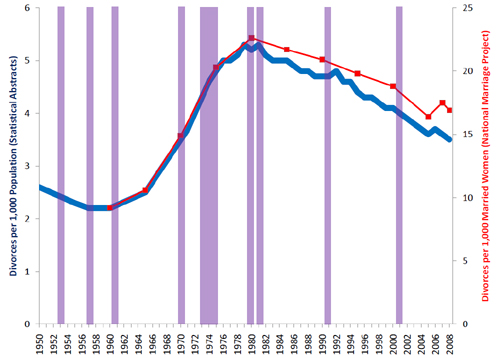
 Divorce seems to be declining fairly significantly since it reached its peak in 1980s. (There are many reasons for this, of course, not all good.)
Let's start with violent crime rates, which seem to be consistently dropping over the past 30 years.
Below are the categories of violent crime broken down more precisely. Everything, from murder, to assault, to rape, is down since the 1980s.Trends in domestic violence are particularly tricky, since what gets reported is always fluctuating. Below is a graph, though, indicating that domestic violence has dropped over the past decade.
Below is a chart attempting to capture the presence of armed conflict in the world. The trend seems to be down over the past 20 years meaning the world is, on the whole, a more peaceful place. This is hard for us to conceive, because we ourselves have been engaged in minor conflicts since 2002. Overall, though, the trend is down.
 Abortion rates seem to have slowly declined since 1980.Divorce seems to be declining fairly significantly since it reached its peak in 1980s. (There are many reasons for this, of course, not all good.)
And well deserved [Bryan]
The U.S. Senate voted overwhelmingly last week to allow indefinite detentions of people suspected of terrorism, even if they are found in the U.S. This means that if the government merely thinks you are a terrorists, it can lock you away forever. You get no chance to defend yourself, no trial or due process. Unbelievable. Anyway, Jon Stewart gives this vote the nervous ridicule it deserves.
Monday, November 28, 2011
A truck I built [Andrew]
[Below is Andrew's (age 5) first blog post -- BW]
I made a Lego car and I also wanted you to see it. I would like you to see it on the computer. It has taillights that look realistic and also it looks like a real truck.

I made a Lego car and I also wanted you to see it. I would like you to see it on the computer. It has taillights that look realistic and also it looks like a real truck.

Sunday, November 13, 2011
Nostalgia de la luz [Bryan]
I saw an amazing movie last weekend, Nostalgia for the Light, a film by Patricio Guzmán. It is a heartfelt documentary, more of a reflective essay, really, than an informational film. It deals with the seemingly different activities occurring in Chile's Atacama desert. On the one hand, you have astronomers taking advantage of the dry conditions to observe the ancient light coming from distant galaxies; on the other hand, you have mothers of the political prisoners who were killed during the reign of dictator Augusto Pinochet, looking for the thousands of bodies that were dumped in the same desert some 35 years ago. The film attempts to make the connection between these activities, namely, that they are both exploring the past in a way that situates our identities in the present.
Some of the stories the film tells are simply amazing: A woman describing the moment when she realized that a foot that had been unearthed was her brother's foot, and that he was never coming back. A young mother, my age, describing how the authorities had many years ago forced her grandparents to choose between revealing the location of her parents or losing her -- forced to choose, in effect, between the life of their child and the life of their granddaughter.
It was the images, though, the stunning visuals, that really struck me: The pictures of a simple Chilean house representing the sleepy Santiago world before the dark political turmoil of the 1970s. The fading pictures of some of the prisoners, before they were prisoners, full of hope and naive confidence that they could change the world, now dead. The footage of bodies, partially mummified by the dry desert conditions, being unearthed from their mass graves, with expressions of horror still frozen in their faces.
A sad, beautiful, haunting, and thoughtful film. Highly recommended.
Some of the stories the film tells are simply amazing: A woman describing the moment when she realized that a foot that had been unearthed was her brother's foot, and that he was never coming back. A young mother, my age, describing how the authorities had many years ago forced her grandparents to choose between revealing the location of her parents or losing her -- forced to choose, in effect, between the life of their child and the life of their granddaughter.
It was the images, though, the stunning visuals, that really struck me: The pictures of a simple Chilean house representing the sleepy Santiago world before the dark political turmoil of the 1970s. The fading pictures of some of the prisoners, before they were prisoners, full of hope and naive confidence that they could change the world, now dead. The footage of bodies, partially mummified by the dry desert conditions, being unearthed from their mass graves, with expressions of horror still frozen in their faces.
A sad, beautiful, haunting, and thoughtful film. Highly recommended.
Soccer stars [Bryan]
My experience having kids in youth soccer has been mixed. They've always been among the younger children on their teams, and play is usually dominated by one or two older boys, leaving our kids to be more like spectators than participants. Plus, I've found it is hard to instill in my kids a competitive thirst. Away from the playing field, we usually tell them to share, to play nice, to not push, etc. Expecting them to then be hyper-aggressive in sports seems almost unjustified, no matter how much I scream "ATTACK!" maniacally from the sidelines. Thus, until this season, neither Nora nor Andrew had even come close to taking a shot on goal, let alone actually scoring a goal. They have both played multiple seasons.
This year, though, was a qualified success. First, there is Andrew. Andrew loves to play goalie. He gets so excited when he sees the ball approach that he starts to jump up and down in the goalie box. Some of the other parents called him the "dancing goalie" for this very reason. Andrew, being somewhat timid on the field, had not really shown his skills all year, even in practice. The next-to-last game of the season, Andrew was goalie and picked up the ball around the goal. The coach told him to wait for a minute and then to carefully throw the ball to a teammate off to the side. Andrew, apparently not hearing his coach, instead decided, with a wonderful, even mischievous grin on his face, to open up a can of drop-kick-from-hell on the other team. He grabbed the ball, tossed it in the air, and kicked it as hard as he could. The ball took off, well past the midfield line, like a shrieking comet, soaring and flying, over the heads of teammates and opponents alike. The coach's mouth dropped open. Then, grinning, he said, "Well, that's okay, too."
Second is a Nora story. Nora is actually a very skilled player. She controls the ball well, and can kick with determination and strength -- that is, when she is mentally in the game. It is easy for her to defer to the bigger stronger boys on the team and, over the season, she seemed to become more and more timid. But then it happened. Nora was playing forward. She happened to find herself in the middle of the field. The ball was deflected in her direction and the other team's goalie was way out of position. Nora gave the ball a little kick, redirecting it toward the goal, knocking it gently into the net. GOOOAAAAALLLLLL! I was speechless and just stood up with my hands in the air. Nora looked back at me with a look that asked, "Did I just do that?" I was so happy for her. I made a big deal of it. She was somewhat embarrassed by my excited praise, afterwords saying that she didn't want to score anymore because she didn't like all the attention. Something changed, though, from then on out. Having tasted the thrill of scoring, of excelling, of sticking it to her opponent in a fierce battle of will, she would not be stopped. Her game really blossomed after that and she scored a goal in her next game, which was her last game, as well. This was after 3 years of not even taking a shot!
So, like I said, a qualified success. Perhaps even more than that.


This year, though, was a qualified success. First, there is Andrew. Andrew loves to play goalie. He gets so excited when he sees the ball approach that he starts to jump up and down in the goalie box. Some of the other parents called him the "dancing goalie" for this very reason. Andrew, being somewhat timid on the field, had not really shown his skills all year, even in practice. The next-to-last game of the season, Andrew was goalie and picked up the ball around the goal. The coach told him to wait for a minute and then to carefully throw the ball to a teammate off to the side. Andrew, apparently not hearing his coach, instead decided, with a wonderful, even mischievous grin on his face, to open up a can of drop-kick-from-hell on the other team. He grabbed the ball, tossed it in the air, and kicked it as hard as he could. The ball took off, well past the midfield line, like a shrieking comet, soaring and flying, over the heads of teammates and opponents alike. The coach's mouth dropped open. Then, grinning, he said, "Well, that's okay, too."
Second is a Nora story. Nora is actually a very skilled player. She controls the ball well, and can kick with determination and strength -- that is, when she is mentally in the game. It is easy for her to defer to the bigger stronger boys on the team and, over the season, she seemed to become more and more timid. But then it happened. Nora was playing forward. She happened to find herself in the middle of the field. The ball was deflected in her direction and the other team's goalie was way out of position. Nora gave the ball a little kick, redirecting it toward the goal, knocking it gently into the net. GOOOAAAAALLLLLL! I was speechless and just stood up with my hands in the air. Nora looked back at me with a look that asked, "Did I just do that?" I was so happy for her. I made a big deal of it. She was somewhat embarrassed by my excited praise, afterwords saying that she didn't want to score anymore because she didn't like all the attention. Something changed, though, from then on out. Having tasted the thrill of scoring, of excelling, of sticking it to her opponent in a fierce battle of will, she would not be stopped. Her game really blossomed after that and she scored a goal in her next game, which was her last game, as well. This was after 3 years of not even taking a shot!
So, like I said, a qualified success. Perhaps even more than that.


Tuesday, November 08, 2011
On the urge to occupy [Bryan]
I'm not a huge fan of the "protest-left," so I have mixed feelings about the Occupy Wall Street people. I think their energies could be much better employed actually engaging in partisan politics, like the Tea Partiers did when they took over the agenda of a major political party.
However, there is no denying that the OWS folks have brought attention to a real problem. You don't have to be a militant egalitarian to acknowledge that a country is sick when it has such vast and growing income disparities as we have now. The top 1% has done really, really well over the past 30 years, much better than other income groups. This has led to an enormous amount of political power given to a small group of people (almost an oligarchy).
Meanwhile, conservatives' unrelenting goal seems to be to preserve and extend lower tax rates for these favored few -- notwithstanding our big deficits, crumbling roads and bridges, and a decimated public service sector. Mitt Romney's economic plan, to name just one example, would include a $6.6 trillion tax cut that would primarily benefit wealthy individuals and corporations (source), thus making the all of these trends even worse. Personally, I don't have anything against people who have made a lot of money, at least when it is made through their hard work and initiative rather than through social privilege and bailouts. I wouldn't mind making more money myself. Asking people who have done very, very well over the past 30 years to pay a moderately higher tax rate seems both fair and pragmatic. You don't have to "hate the rich" to see this is good policy. Conservatives who are concerned with social stability should recognize this as much as anybody.
Anyway, below I've prepared a fun array of charts (fun for me anyway) to illustrate what is happening and why.

The above chart tells the story told in terms of the growth of average income. The income of the top 1% (the red bar) has grown much more than the average family income (the blue bar) since 1979.
 Above is roughly the same information broken down by income group.
 Here is story told in dollar amounts. Again, massive growth for a few, while everyone else is flat.
 The story by income share. Key point: The growth in income of the top 1% has come at the expense of other groups. A rising tide is not lifting all boats.
 Here is one reason why this has happened: Tax rates for the wealthiest have plummeted lately, even as they make much more money.
 Meanwhile, many corporations still pay no taxes. It is true that America on paper taxes corporation at a fairly high rate compared to other countries (perhaps too high). However, the loopholes and subsidies allow many corporations to pay a tiny fraction of their assigned tax rate.
 Another reason for the stagnation of the middle class has to do with the declining influence of unions. Again, you don't have to think unions are perfect (I sure don't) to recognize that they have played an important role in making sure that everyone benefits from economic growth.
However, there is no denying that the OWS folks have brought attention to a real problem. You don't have to be a militant egalitarian to acknowledge that a country is sick when it has such vast and growing income disparities as we have now. The top 1% has done really, really well over the past 30 years, much better than other income groups. This has led to an enormous amount of political power given to a small group of people (almost an oligarchy).
Meanwhile, conservatives' unrelenting goal seems to be to preserve and extend lower tax rates for these favored few -- notwithstanding our big deficits, crumbling roads and bridges, and a decimated public service sector. Mitt Romney's economic plan, to name just one example, would include a $6.6 trillion tax cut that would primarily benefit wealthy individuals and corporations (source), thus making the all of these trends even worse. Personally, I don't have anything against people who have made a lot of money, at least when it is made through their hard work and initiative rather than through social privilege and bailouts. I wouldn't mind making more money myself. Asking people who have done very, very well over the past 30 years to pay a moderately higher tax rate seems both fair and pragmatic. You don't have to "hate the rich" to see this is good policy. Conservatives who are concerned with social stability should recognize this as much as anybody.
Anyway, below I've prepared a fun array of charts (fun for me anyway) to illustrate what is happening and why.

 Above is roughly the same information broken down by income group.
 Here is story told in dollar amounts. Again, massive growth for a few, while everyone else is flat.
 The story by income share. Key point: The growth in income of the top 1% has come at the expense of other groups. A rising tide is not lifting all boats.
  Here is one reason why this has happened: Tax rates for the wealthiest have plummeted lately, even as they make much more money.
 Meanwhile, many corporations still pay no taxes. It is true that America on paper taxes corporation at a fairly high rate compared to other countries (perhaps too high). However, the loopholes and subsidies allow many corporations to pay a tiny fraction of their assigned tax rate.
  Another reason for the stagnation of the middle class has to do with the declining influence of unions. Again, you don't have to think unions are perfect (I sure don't) to recognize that they have played an important role in making sure that everyone benefits from economic growth.
 Monday, November 07, 2011
October Pictures [Bryan]
 Nora was a "batterina" this year.
 Stephen, a dragon, practicing his roar.
 Andrew, a race car driver
 We went to the Corn Maize at Darby Creek to pick out our pumpkins and partake of the quaint autumn festivities.
 Stephen, as ghoul.
 Our Halloween party.
 15 hyper kids. Good times.
 Ah yes, and some good eating. I made up some roasted pumpkin salad with goat cheese, arugula and mint. Also, some pork loin with burnt brown sugar, thyme, and orange confit.
Tuesday, November 01, 2011
You know nothing of my work [Bryan]
Someone posted my favorite scene from Woody Allen's masterpiece, Annie Hall, so I had to re-post it here. In this moment, a blowhard professor is pontificating about media theorist Marshall McLuhan and gets nailed as Allen pulls in McLuhan himself to set the record straight. Just so you know, I live in fear of just this: big shot mind scoldingly saying, "You know nothing of my work...How you ever got to teach a course in anything is totally amazing."
Subscribe to:
Posts (Atom)