Tuesday, June 09, 2009

Why Was Our Healthcare So Expensive? [Bryan]

We recently added up the total hospital bills for the birth of baby Stephen. Remember, we had an emergency C-Section, plus a brief visit to the NICU. Ellie's bill totaled $20,000, while Stephen's totaled about $10,000. That is a lot of money. Luckily, we didn't have to pay these bills with our insurance, but it got me wondering: Why does health care cost so much?

In addition, I've been wondering why American health care performs so poorly against other health care systems worldwide. In other countries, they spend a fraction of what we spend on health care, but their health outcomes are usually much better than ours. Why does our health system do so poorly with all the money we put in?

I think I've finally found an answer, and it has almost nothing to do with malpractice lawsuits, greedy insurance companies, or "socialized medicine" or lack thereof. The problem is, unfortunately, doctors that have become businessmen (and women). Doctors make money on tests, surgeries, procedures, referrals, and so forth. It is in their interests to maximize the use of health care, which drives up total costs and, since all medical procedures have risks, this actually makes for poorer health outcomes. Or so this article (byAtul Gawande) claims. Go read it. Most interesting thing I've ever read about the health care cost problem.

A snippet from the conclusion:

When you look across the spectrum from Grand Junction to McAllen—and the almost threefold difference in the costs of care—you come to realize that we are witnessing a battle for the soul of American medicine. Somewhere in the United States at this moment, a patient with chest pain, or a tumor, or a cough is seeing a doctor. And the damning question we have to ask is whether the doctor is set up to meet the needs of the patient, first and foremost, or to maximize revenue.

There is no insurance system that will make the two aims match perfectly. But having a system that does so much to misalign them has proved disastrous. As economists have often pointed out, we pay doctors for quantity, not quality. As they point out less often, we also pay them as individuals, rather than as members of a team working together for their patients. Both practices have made for serious problems.

Providing health care is like building a house. The task requires experts, expensive equipment and materials, and a huge amount of coordination. Imagine that, instead of paying a contractor to pull a team together and keep them on track, you paid an electrician for every outlet he recommends, a plumber for every faucet, and a carpenter for every cabinet. Would you be surprised if you got a house with a thousand outlets, faucets, and cabinets, at three times the cost you expected, and the whole thing fell apart a couple of years later? Getting the country’s best electrician on the job (he trained at Harvard, somebody tells you) isn’t going to solve this problem. Nor will changing the person who writes him the check.

Sunday, June 07, 2009

A Little Better? [Ellie]

A few months ago, I read an article in the Atlantic Monthly by Hanna Rosin called "The Case Against Breastfeeding." I'm sure they chose that title just to be provocative, since its author was, in fact, a breastfeeding mother (eerily, nursing her third and last newborn, a boy--just like mine). Rather than actually arguing against breastfeeding, Rosin was more rebelling against the powerful medical and social coercion associated with it.

I can see why she wants to rebel. Breastfeeding is such a fraught issue. I have friends who can't nurse but dearly want to. I have friends who can but wish they had a reason not to. I have friends who've nursed for years and friends who've nursed for months. I have friends who've gone to extreme measures hoping that nursing would eventually work out and then been devastated when it never did. No matter the variation on this theme, no mother I know has escaped completely unscathed. We are judged if we do (she nursed her kids for how long?) and judged if we don't (she's so selfish).

In her article, Rosin contends that, while recent studies have found only modest benefits, if any, tied to breastfeeding, women are continually bombarded with the message that you are only a good mom if you breastfeed. She is irritated by what she sees as the constant yet unwarranted cheerleading of breastfeeding advocates. Rosin would modify the "breast is best" chant of La Leche-leaguers to "breast is only a little better."

A little better? Well. I'm not here to contest her point. I haven't read the research. She might be right. But I need to believe that the sacrifices I'm making to breastfeed are not just "a little better." For instance, I recently had to turn down the invitation of some friends to go camping because I didn't know how I would manage the breastfeeding issues (To vanish or not to vanish? If not, then I'll have to wrestle with a nursing cover. . .). I've had to interrupt the writing of this blog post on breastfeeding to breastfeed (no lie). I can't really take my kids to the zoo by myself this summer because I don't know what I'd do with my other two in such a vast public place while I breastfeed. Plus the whole nastiness of having to breastfeed in public, period.

Anyway, what I'm arguing for is this: I want to retain my mistaken belief that it is a LOT better to breastfeed. I want Stephen to be healthier, smarter, richer, better looking, and better behaved. I want his guaranteed admission to an Ivy League institution. And for me I want. . .a medal.

But I'll settle for the fact that despite its myriad inconveniences, I kinda like breastfeeding. I love the physical and emotional connection it builds between me and my son. While it might not be as beneficial as I'd like to believe, it still feels like The Right Thing to Do. And I'm a sucker for that kind of stuff.

Wednesday, June 03, 2009

What kind of world will Stephen have? [Bryan]

Last night I watched a show that really, really bothered me. It was called 2100, an ABC News special broadcast. The premise of the show was following a fictional girl, named Lucy, through life as it might play out if some of the projections currently being made about climate change and other environmental problems turn out to be accurate. The segment claimed that these were "worst case" projections, but they seemed relatively moderate to me (at least until the end, which seemed a bit far-fetched). The effects of climate change, judged by melting sea ice and glaciers, seem to be outpacing even the most pessimistic assumptions. They did the segment with some good graphic-novel type of animation, which had a surprising impact on me.

The segment stuck with me because this could be the life of my kids. Stephen, like the character Lucy, was born in 2009. I really wonder what sort of world we are leaving behind for Nora, Andrew, and Stephen. Not a good one, I think. We've really trashed the place -- and it wasn't our place.

The projections are relatively familiar: Gas shortages and riots as oil demand vastly exceeds supply. Outer suburbs become vast slums as people abandon them to live closer to the cities (can't afford to drive). Water shortage in the American Southwest (bye, bye, Las Vegas) and in cities that depend on glacier run-offs. Water shortage and soaring cost of oil lead to food shortages and mass starvation in other countries. Thirsty and starving people destabilize national borders, populations move as islands and low-lying cities flood, leading to war and civil unrest. It is all very grim.

Now, this isn't the only scenario, and certainly the human race has avoided disaster before. There was never a nuclear war, for example, which was a prospect that used to terrify me as a kid. But, in that case, it was obvious that our short-term interest was in not getting blown up. That created restraint and, to some degree, wisdom. With these sorts of problems, our short-term "economic" interest lies in doing more of the same. Humanity has never shown much interest in thinking about long-term problems. I like to think we can avoid this, but governments (and I am looking at you US Senate) seem resistant to even the most modest measures of restraint. I hope somebody proves me wrong.

Here is the opening segment.

Earth 2100: Civilization at Crossroads

Shared via AddThis

Nora Happenings [Bryan]

Nora's Kindergarten didn't do a graduation (thank goodness!). But they did have a little open house with punch and cookies on the second-to-last day of school. Here is Nora on the school playground with some friends.

Nora and her teacher, Mrs. P., on the last day of school.

Nora's school. Not much to look at, but we like it. The school district is very short on funds (the community refuses to pass a levy), but they do great things with their very modest resources.

Nora recently wrote a series of books we've taken to calling the "Haley series" -- Haley at the Park, Haley Goes to Wal-mart, etc. Haley, from what I understand, is the name of a friend of hers at school. Here she is showing off her work.


Nora's latest piano recital.

Monday, May 18, 2009

Huntsman, Romney, and the Mormon Vote [Bryan]

Interesting commentary on the new Huntsman gig with the Obama administration:

The nomination, yesterday, of Utah Governor Jon Huntsman to be US Ambassador to the People's Republic of China - like Romney, a handsome and articulate boy-wonder billionaire of that faith - has those eyebrows wagging again. It speaks volumes of the outside-the-box tendencies of the President and his team that the thought would even occur to them to appoint such an unexpected envoy, that they would know that Huntsman - a former LDS missionary in Taiwan - speaks Mandarin, and that they'd be able to convince the Governor to switch jobs for a post that is not necessarily a promotion. They must have also had good enough intelligence to sense that Huntsman was bored at his current gig. That they made the sale is a head turner, indeed.

That they announced this shortly after Republican National Committee chair Michael Steele gaffed his way into another controversy, this time regarding the evident anti-Mormon bigotry in Evangelical Christian circles, is nothing less than political poetry. Steele said, on Bill Bennett's radio show, "Remember, it was the base that rejected Mitt because of his switch on pro-life, from pro-choice to pro-life. It was the base that rejected Mitt because it had issues with Mormonism..."

What is a gaffe? Generally it's something that's true but that society doesn't want to admit.

Mitt Romney is technically the frontrunner for the GOP presidential nomination in 2012. He's got the money, a national organization, and the on-camera talent and political experience to handle the national spotlight. Ideologically, his positions line up pretty perfectly with the conservative GOP platform. If any Republican "deserves" it for having paid his dues loyally to the party, it's Mitt. And yet it's extremely unlikely that the said GOP base - we're talking mainly white Southern Baptists here - is going to get over its Mormonphobia in just three years enough to make that possible.

The appointment of Huntsman is thus, politically, a slam dunk. When GOP primary voters inevitably reject Romney once again in the 2012 primaries and caucuses outside of the Mountain West, the resentment - already boiling after last year's adventures in presidential politics - among rank-and-file Mormons that the party to whom they've given so much still doesn't really want them in the Master's house rather than the servant's quarters, will sting. Meanwhile, another of their prominent citizens will likely still be Obama's man in Beijing, proof that somebody in American politics isn't dissing the LDS and its members. And in key swing states like Nevada and Colorado, LDS members are legion.

Some said Obama was crazy, back in 2007 and 2008, to reach out to what conventional wisdom thought was an impenetrable GOP base... Crazy, like a fox.

It may be that Huntsman is setting himself up as a picture-perfect, bipartisan-friendly Republican presidential candidate in 2016. Whatever the case, it reinforces the message I've been peddling for a long time now: the base of the Republican party despises Mormons. Why we Mormons want to associate ourselves so closely with that mean-spirited group perplexes me.

Sunday, May 10, 2009

Mother's Day Rant [Ellie]

I'm pretty sure that I've failed to keep every one of the "my child will never. . ." resolutions I made before I became a parent, and my oldest is only six.

My child will never be the one to hit. (How many two-year-old boys don't? Mine did.)

My child will never be the one with the permanent runny nose. (Pass the Kleenex--from October to April, Baby.)

My child will never run around the house naked. (Oh, I've beat that. I've had--within a period of months--two kids naked in public because I forgot to bring changes of clothing.)

My child will never wear dirty clothes out of the house. (How many times can you change one child's clothing in a day?)

I have no more illusions that I am now or ever will be a perfect mom. I've waved a tearful goodbye to each illusion as it flew out the window and I turned to face the reality of life with my children.

But, this isn't the rant you might expect. I'm not going to tell you how much I hate Mother's Day because I'm not good enough and I feel guilty and why do people idealize mothers, anyway etc., etc., etc. I know many women feel that way. But I, personally, love Mother's Day. My rant is directed to mothers who don't. Here are my "Top Five" reasons they should love Mother's Day, too.

1. You went through 9 months of pregnancy and then hours of excruciating pain during labor just to get the kids here. I think that alone deserves one day of thanks per year.

2. No matter how inadequate you feel, think for a moment about the sacrifices you have made for your children. No mother sacrifices nothing, and most sacrifice many things--sleep; careers; money; free time; being surrounded by clean, beautiful, unbroken things; time alone with their spouse--every day. Let them thank you for it.

3. How do you think your kids feel when you tell them you hate Mother's Day because you don't feel like a good mother? Like they must be lousy since you're so unhappy with how they turned out. That's how.

4. Who doesn't like to be treated well--breakfast in bed, sloppy kid kisses, hand-drawn cards, the obligatory Mother's Day school-made flowerpot complete with wilted flower, dinner made for you--for one day. Just enjoy it!

5. There is no ideal mother. She is imaginary. We are all inadequate to the task. But we give it our all, and that dedication is worth celebrating.

Sunday, May 03, 2009

Photos [Bryan]

Stephen is a gloriously fat and generally happy baby.

Andrew at an Easter-egg hunt (one of three)

Happy Stephen again.

Nora showing off her new pink dress.

Dressed for Easter.

Wednesday, April 29, 2009

First 100 Days -- Updated [Bryan]

So, we have had 100 days with a new president. Fair or not, since FDR 100 days have been seen as the first time to realistically review a new president. So, here is my review.

Foreign Policy

Successes: One of the major reasons I supported Obama was to change the image of America in the world. It seems to me that, so far, this expectation has been fulfilled -- and then some! The most impressive symbolic acts so far have been the open town hall meetings, press conferences, and speeches he has given in Europe and Turkey. He has impressed foreign leaders, reporters, and citizens far and wide. This will all certainly pay off in the long run. He has already made important moves with Russia in the areas of nuclear non-proliferation and nuclear disarmament. His Cuba policy (easing travel restrictions and monetary transactions) is a welcome change, and relations appear to be greatly improving with Latin America. He seems eager to listen, rather than preach.

Failures: He has been unable to convince European countries to increase stimulus spending, which could prove to be very important in the economic recovery. I don't think this is as big a deal as some do, but it is still a failure.

Question marks: The Big Unknown right now is Afghanistan/Pakistan. Obama, as he promised, is sending more troops to the region. I am genuinely unsure of whether this is the best thing to do. The situation is both countries appears is worsening. It also remains to be seen whether Obama has the strength to stand up to the current far-right Israeli government and its odd supporters here at home, and put some real pressure on Israel to stop building illegal settlements in the West Bank (of course, he needs to continue to pressure Palestinians to stop rocket attacks, but that is a given).

Reading: "Signs of Spring: U.S.-Latin America Relations Thaw," Time.
Reading: "Obama in Europe: Overtures to Ovations," Financial times.
Reading: "9 Moments That Mattered," Atlantic
Reading: "Aided by Safety Nets, Europe Resists Stimulus Push," NY Times

Economy

Successes: The stimulus package was impressive. It was probably not big enough and too focused on less-stimulative tax cuts -- but the blame for that lies elsewhere. If anything, Obama might have made a mistake in trusting that Republicans would compromise in good faith. Obama's budget was a much more honest budget than we've had in the past (actually including the costs of war), and contains money for all the right priorities (energy, health care). Not bad at all -- good long, term investment.

Failures: Bailout money is still being spent in unseemly ways, thanks to incomprehensible behavior by Wall Street executives. Obama's response has been erratic and fairly weak.

Question marks: The big banks and the auto industry are still in big trouble. All of the options seem bad. Good luck with that, Mr. President. And, obviously, current deficits are not sustainable. Perhaps the big test of the Obama presidency will be, once the economy recovers, to bring these under control through a mixture of sensible spending reductions, tax hikes, and health care restructuring. He is already taking steps to do this, but we'll see.

Reading: "I give Obama an A, a B and an F," Rob Reich

Restoring the Rule of Law

Successes: Obama seems to have a plan in place to close Gitmo and he has slammed the door on torture practices. His decision to release the torture memos was brave and the right thing to do. Hooray!

Failures: His notions of the legal status of "enemy combatants" and of illegal wire tapping have been indistinguishable from Bush's. Boo! Boo! Boo!

Question marks: I am undecided whether prosecutions of the Bush wrongdoers should proceed in a vigorous way. I can see the need for it (we are a nation of laws, for heaven's sake), but I can also see it completely distracting from the rest of his important agenda.

Reading: "Report Card on Civil Liberties," American Prospect.

Overall, I think he has done a good job so far -- probably even an excellent job. Great challenges and questions remain.

Update:
Some other thoughtful reflections on the first 100 days:
Mike Tomasky: "100 days: Setting the tone for America"
Yglesias: "Obama is on track to accomplish major changes"
Daniel Gross: "The Patient is in Stable Condition"

Saturday, April 25, 2009

Jeni's Splendid Ice Cream

One of the best parts about Columbus, Ohio, is Jeni's Splendid Ice Cream. You will never taste such a creative, tasty ice cream menu. My top five flavors:

1. Goat Cheese with Roasted Red Cherries -- Blue Jacket Dairy goat cheese with roasted Michigan cherries.
2. Thai Chili -- Krema Peanut Butter (a Columbus company), with toasted coconut, cayenne and coconut milk.
3. Sea Salt and Olive Oil -- Salt, oil, and pumpkin seeds (no, really, it is great).
4. Pistachio and Honey -- Toasted pistachios with Ashland County honey.
5. Strawberry Rose Petal -- Fresh strawberries, with a hint of real rose.

Friday, April 17, 2009

Springtime on Campus [Bryan]

Spring is my favorite season on a university campus. The energy starts to increase as people sense that the end of the year is in sight. Students begin to emerge from their dormitories and can be seen frolicking, sunbathing, and studying in the sunshine, while a crazy fundamentalist preacher simultaneously calls these young sinners to repentance -- unsuccessfully. I just got back from the central oval, where I sat on the grass, prepared my lesson for Monday, read philosophy, and took it all in. And right now, my office window is open to a blossoming tree just outside. The wind is gently blowing the subtle fragrance inside, and I'm snorting it in like a drug. This is what I signed up for. Life is good.

Tuesday, April 14, 2009

When it rains, it pours [Ellie]

Look at me posting twice in one day. . .

I've been thinking about nicknames lately. My theory is, either you're a nicknamer or you're not. I love nicknamers. There's something so chummy and at-home-with-the-world about them. If they don't like a person's name, well, they just come up with their own. They never question their right to do so. They are confident that people will answer to whatever they choose to call them. I've always had friends who were nicknamers, and while I've generally hated their nicknames, I've loved what I saw as the desire behind the nicknames--to express their affection in a comfortable shorthand. I wish I were a nicknamer.

I'm not. I've tried. I feel awkward and goofy. I'm pretty much unable to call anyone by anything but the name by which they were first introduced to me. My sons are Andrew and Stephen, not Andy or Steve (I don't mind if it happens some day, I just won't call them that). My nicknames for my kids are unimaginative and lame: two Buddies and a Sweet Pea. I can't even come up with a new nickname for Stephen--he just has to be "Little Buddy" to Andrew's "Big Buddy."

Stephen really ought to have his own nickname. He'll have enough hand-me-downs to deal with in his life. Suggestions, anyone?

A Riff on New Babies [Ellie]

Love it
-new baby smell
-his scrunchy face with its thoughtful expressions
-huge toothless smiles
-cuddling a sleeping baby on my chest
-tiny little shoes
-his chubby thighs and soft skin
-bath time
-knowing someone is so comforted by my presence

Could do without
-the feeling that I'm swimming in body fluids (One day recently I counted seven different body fluids--mine and others--that had been smeared on me during the day. Don't think about this too
closely. . .)
-smelling like sour milk all day every day
-changing shirts three times a day
-having my carefully constructed a wall of airy indifference ("It doesn't matter what happens at home while I'm out; I deserve some time off!"), crumbled by the guilt of opening the door to hear my baby screaming and see my husband looking weary
-the desperate feeling of really needing to nurse
-my incredibly limited attention span
-this terrible sugar craving which is sabotaging my efforts to lose the baby fat

Monday, April 06, 2009

Montreal [Bryan]

Last month was conference month for me. This year, my big conference was in Montreal, Canada. When I first went to these academic conferences, I felt very awkward. "Mingling" has never been an activity that I excel at, or even enjoy very much. Now, though, there is a critical mass of people that I know and like, and it always feels like a reunion to see them all again.

I liked Montreal, too. I spent an afternoon exploring the "old city," the highlight of which was a visit to the beautiful Basilique Notre-Dame de Montreal. It had a stunning interior -- perhaps the most beautiful church interior I've seen. I forgot my camera, but here is a nice shot I found elsewhere.


The next afternoon, I explored the Musée des beaux-arts de Montréal. They have a nice little representative collection -- Monet, Rembrandt, Picasso, Boucher, Renoir, Cezanne, etc.


I then hiked up the Royal Mountain (Mont Real in old French) -- the hill in the middle of the city from which it derives its name. Great view of the city (and my face, I might add).

360 Degrees


By the way, if you are ever in Quebec, be sure to order some Poutin -- french fries, cheese curd, and gravy. Yummy stuff -- "quintessential Canadian comfort food."

Friday, March 27, 2009

Warnicks go semi-vegetarian [Bryan]

I've long resisted the arguments of the various vegetarians I know. Vegetarianism seemed to go hand-in-hand with a style of elitist, latte liberalism that I don't like. Ellie and I were talking the other day, though, and we've decided to substantially cut down on our meat consumption. The number of reasons became too long to ignore. Here are the reasons:

(1) Economic: Meat is expensive. We could save money cutting down.
(2) Health: Meat isn't very good for you; vegetables are.
(3) Ethical: Factor farms, where most meat comes from, are still fairly cruel places. I am not convinced that animals have a "right to life," but I do think they have a right not to suffer.
(4) Religious: The LDS Word of Wisdom suggests that meat should be used "sparingly," while the Bible clearly contains a vegetarian ideal (pdf). It is time to take this seriously.
(5) Environmental: The meat industry is a leading contributor to global warming, water use, and deforestation. (Not that I am convinced that we will make any difference in this regard -- large scale reforms are needed for that, not personal virtue.)
(6) Taste: We like vegetarian cooking quite a bit.

So, there you have it. We won't cut meat out of our diet. It plays an important role in moments of family celebration (Sunday dinner, holiday meals, etc.). From now on, though, we want to eat meat with more conscious "thanksgiving" than as an unthinking habit.

Wednesday, March 18, 2009

Final Four Picks [Bryan]

March is probably one of my favorite months. Nothing beats the NCAA tourney. I can never get any work done the first Thursday of the action, when games begin at 12:00.

I'm sure everyone has been wondering about my Final Four Picks this year. Here they are: UNC, Duke, UConn, Kansas

I think UNC will win it all if they are healthy. If not, I'd go with UConn.

Xavier is my sleeper team.

Utah, OSU, and Illinois will lose in the second round. BYU and USU in the first.

You can take that to the bank.

Monday, March 16, 2009

Sunday, March 15, 2009

Movie Recommendations [Bryan]

Looking for some good movies?  Ellie and I both strongly recommend the following flicks we've seen recently: 1. The Lives of Others -- A German movie about living under the surveillance state in East Germany. 2. Children of Heaven -- An Iranian movie about a boy who loses his sister's shoes. (I know it sounds boring, but it isn't).

Sunday, March 08, 2009

Budget Blogging [Bryan]

A dialogue on the federal budget:

Friend: So, Bryan, have you seen the Obama administration's proposed budget? Looks like a huge move to socialism to me. I warned you about him. He is Karl Marx incarnate.

Bryan: Everything about his budget proposals are in line with his campaign promises. Everything. The energy policy, the health care policy, the education policy, and tax policy...everything. I know actually following through on campaign promises is new to people, but that is exactly what he is doing.

Friend: But he is stealing from the rich to give to the poor. He is raising taxes on the wealthy -- those that invest and innovate. He is a communist I say!

Bryan: This is nonsense on stilts. Absolute and utter nonsense. Below is a listing of the top marginal income tax rate across the decades. The far right column is Obama's proposed increase (up to 39.6%). Even with Obama's tax increase, it is lower than it has been for most of American history. It is lower than most of the time it was under Ronald Reagan (it was a 50% rate for most of Reagan's presidency). Was Ronald Reagan a communist? Was Eisenhower, Truman, or Nixon? Notice that America often prospered under a much heavier tax scheme. People who think this is new or radical simply do not know what they are talking about.

Friend: But is it wise to raise taxes in a recession?

Bryan: No, you're right, it wouldn't be wise. That is why the tax increases (or, more accurately, the expiration of Bush's tax cuts) won't take effect until 2011. If the economy is still in recession at that point, the budget can be revisited.

Friend: Wouldn't a better policy be a spending freeze, like Republican Rep. John Boehner (House minority leader) has recently proposed?

Bryan: No, in fact that would be the absolute worst thing that anyone could enact. A recession occurs because, for whatever reason, people stop spending. Because people aren't spending, nothing can be produced, jobs are lost, and so forth. If the also government cut spending, things would be catastrophic. This is actually what Hoover did (and, to be honest, what FDR did in 1937), both with the terrible consequence we now call the Great Depression. The fact that Boehner proposed such a thing, frankly, shows the intellectual bankruptcy of the Republican party.

Friend: But I've also heard that the Obama budget would reduce the tax deduction that the wealthy can take for charitable giving. Won't that take money away from charities when they need the money the most?

Bryan: First, none of this will happen until 2011. Second, it simply reduces the deduction to rates to those present under Reagan (reduce it to 28 cents on the dollar for people earning over $250,000). Third, it has been calculated that the reduction in charitable would be about 1% -- a small price to pay for a start toward universal health care. Fourth, although this is not Obama's position, I have doubts about the wisdom of this deduction anyway. There is almost no accountability behind the groups that allow you to claim this donation.

Friend: But Obama is really adding to the budget deficit. In the long run, this will cause inflation and dry up funding for private investment.

Bryan: I don't think we should be worried about inflation right now. For one thing, there is no sign of anything approaching inflation. For another, we seem to know how to handle inflation fairly well through monetary policy.

True, there is big deficit over the next couple years. The Obama plan has a deficit of about $1 trillion in 2010 and 2011. Fighting two wars and a huge financial crisis doesn't help things. The deficit is projected to then drop to $533 billion by 2013. This still sounds high, but it is only about 3% of GDP which (I'm told) is fairly manageable. It is not even that big by historical standards.

Let's be clear: we are facing huge problems as a country, problems that every president since Reagan has let fester and get worse. It will take time and money to correct our course.

Remember, a budget deficit cannot be evaluated unless you figure out what you are getting for the deficit and if that spending supports long-term growth. Is the president's projected deficit a good investment or not? If we are making progress in areas like health care, global warming, education, infrastructure, and so forth, we are setting ourselves up well for the future. If we are funding pointless wars, we are not. I haven't read the whole budget, but there are lots of good things therein from what I have read, things that seem like really good investments. In the area of education, for example, there is more money for college education and for preschools. These sorts of investments will make a big difference.

Friend: I see the light now, Bryan. Thanks for enlightening me.

Sunday, March 01, 2009

Baby doing well (with pics) [Bryan]

Baby Stephen is almost three weeks old already and doing great. He is sleeping 6-8 hours at night. He usually wakes up once and then goes right back to sleep for 2-4 more hours. This makes for a good night sleep for us! Stephen rarely cries and so far is an ideal baby.

One cute thing: Andrew has taken to reading him stories. Andrew sits next to Stephen, points to a picture and talks about it, and then puts the book right in front of Stephen's face. Picture below.

Stephen had his "baby blessing" in church this Sunday -- I thought of changing his name then to "Spencer Grant" but Ellie would have killed me. Grandma and Grandpa Warnick came out to visit us and it has been wonderful to celebrate with them.


Friday, February 27, 2009

Interested in a slimmer government? [Bryan]

There has been much talk lately about how we can reduce the budget deficit over the long run. Hmmm, let me think...

Friday, February 20, 2009

Triology Meter [Bryan]


This chart measures the "quality" of each installment of a movie trilogy. I can't say I disagree with any of it -- although, to be sure, I haven't seen all the Mad Max movies. Interesting how the third movie is always the worst, and the second is often the best. I wonder why that is.

Monday, February 16, 2009

I love charts [Bryan]

To be sure, much of how one reads this chart depends on what is meant by evolution being the "best explanation" of human life. But it was still shocking to me. We Mormons have a huge number of scientists among us, compared to others. We also have scriptural tools and resources that suggest the creation accounts are not to be taken so literally (we have 5 distinct creation accounts, after all, each one different from the last!). And yet, we are more fundamentalist than almost anyone on this issue. What's up with that? Yikes.

That captures the recent use of the filibuster by the Senate Republicans. Looks like the Republican strategy is this: obstruct anything and hope things get a lot worse. Country first indeed!

Americans seem to think the current health care system just isn't working.

Thursday, February 12, 2009

Baby Pictures [Bryan]

Stephen arrives and is rushed to the NICU -- but was released quickly.

Here he is -- doing well now.


Nora is going to be a great big sister...

...and Andrew a great big brother.

Dad with that overwhelmed feeling.

Tuesday, February 10, 2009

He has arrived! [Ellie]

Just wanted to announce the birth of our newest little Warnick, Stephen Ray. He was born Tuesday, Feb. 10 at 5:39 a.m. He weighed 9 lbs. and a little bit and was 20 3/4 inches long. Just like I'd hoped, I went into labor myself--for the first time. I arrived at the hospital dilated to a 7! My water even broke!

Things continued to be exciting, though, and Stephen had to come out via emergency C-section. He was big, transverse, and distressed. Fortunately, all is well now.

More details and pictures to come.

Sunday, February 08, 2009

Recent pictures [Bryan]

Due date is tomorrow!

After church

Andrew got a toolbox for Christmas, along with safety glasses.

Mitt is (probably) wrong [Bryan]

Apparently, Mitt Romney has been in the news again lately talking about the alleged benefits of tax cuts as economic stimulus. Normally, I would ignore this, but I know a lot of people who seem to respect his opinion. Well, here is a reading list for Mitt:
1. Steven Pearlstein (Washington Post business columnist) explaining the rationale for spending as stimulus in clear, concise, and accessible language.

2. The much-discussed congressional testimony of Mark Zandi (pdf) of economy.com -- see particularly page five for a comparison of the types of stimulus. Most tax cuts, he concludes, are ineffective as stimulus.

3. Analysis from the non-partisan Tax Policy Center. Doubts about most forms of tax cuts as stimulus are expressed here. Their helpful chart of the stimulative effect of the tax cut and spending provisions in the House and Senate plans are here -- complete with A-F grades.

4. Nobel Laureate Paul Krugman on the myths of the stimulus debate. See Kurgman also here and here. Krugman is a partisan, to be sure, and you can find Nobel Laureates disagreeing about these things, but Krugman seems to have been right about a lot of issues from the beginning.

5. Criticism from the Economic Policy Institute relating to the regrettable Senate "compromise" bill that increases largely ineffective tax cuts and reduces much needed spending in things like schools, research, state aid, etc.

6. On the nearly unanimous public support for new infrastructure spending.
The verdict? Mitt's analysis seems to go against what most economists are saying about stimulus. We need spending for stimulus, nearly everyone agrees that we need new infrastructure to stay competitive, so why not just do it?

Friday, February 06, 2009

Naming our baby [Bryan]

Ellie and I have had a difficult time naming our new baby (due date Feb. 9). Nothing seems to match right. We've played around with many names: Stephen Ray Warnick, Geoffry Bryan Warnick, and so forth. We are not entirely happy with what we've thought of.

My dad recently gave us a good idea, though. Some of you might know that I recently received a grant from the Spencer Foundation. It is a small, but prestigious award, and it may very well help me get tenure someday. We were very happy to receive a Spencer grant.

Now, every month Dad puts out a family newsletter and asks us by email what news we want to contribute. On my list of news items from our side of the family, I put down simply "Spencer Grant" remembering that Dad and I had talked earlier about the award. I was proud of it, and I wanted the family to know the exciting news. Apparently, though, Dad forgot about our earlier conversation, got confused about what I meant, and wrote in the newsletter that we had apparently decided to name our baby........Spencer Grant.

It has a nice ring to it actually.

Ignorance on Parade -- Updated Thrice [Bryan]

This is not a stimulus plan, it's a spending plan. It won't create the promised jobs. It won't activate our economy.
Senator Mike Johanns (R)
I have rarely seen such breathtaking displays of ignorance as I have in the past few days. I am trying to decide who is dumber when it comes to the economic stimulus package, the media or the politicians like Johanns. It's a tough call.

Let's review where we are at . The economy is in serious, serious trouble. This is reflected in economic data out today, as well as personal experience. I know several families who have lost their jobs. How did we get here? Well, in 2005 the housing bubble pops. House prices decline. Banks heavily invested in bad loans nearly go under, and people see their equity evaporate or turn negative. Credit almost completely freezes. No one lends money and people feel poor. Businesses and families start to restrict spending, and investors get stingy. Businesses then need to cut back on production. Jobs are then lost. Due to this unemployment, people then buy even less, leading to more production cuts and more failing businesses. More jobs lost. This leads to yet more cuts in consumer spending and investment...and so forth and so on.

One way to deal with this problem is for the Federal Reserve bank to lower interest rates -- this makes lending easier and can entice spending. Alas, the Fed has lowered interest rates to zero and things keep getting worse. To break this cycle, somehow spending needs to pick up again, but no one is going to start spending or investing on their own in this climate.

Luckily, since John Maynard Keynes was around, we now have the idea of "counter-cyclical fiscal policy" solutions. When spending takes a nose dive, Keynes realized that the government can step in a make up the difference. The government can increase spending directly or lower taxes and hope that people will spend themselves. What happened in the Great Depression was that spending was cut and taxes raised at very inappropriate times (thanks to both Hoover and FDR), which is why it turned out so bad. Now we know better. We even know what kind of budget expenditures work best as stimulus: aid to low income families, unemployment benefits, and infrastructure investment (see chart below, which shows the amount of effective stimulus per each government dollar spent).

Now, most Republicans want to exclusively cut taxes for stimulus. While some tax cuts are necessary for quick stimulus, they are less preferable for two reasons. First, notice from the chart that tax cuts don't stimulate all that effectively -- people (understandably) don't spend their tax cut in tough times unless they need to. Second, tax cuts miss the chance to spend money in ways that help us to solve our big social problems. Last year, when the stimulus tax rebate checks arrived, pornography sales increased 20-30%. Imagine: instead of stimulating with porn, we invest that money in medical and clean energy research, broadband expansion, Pell Grants, roads and schools, bridges, high speed trains, and so forth. This is the stuff that makes for long term economic success. Porn doesn't. Tax cuts alone can't make the community investments that really make a difference.

It is maddening to me, not that people like Johanns disagree about the details here, but they don't even seem to understand the basic principles at issue. Either they do not understand, or they want to embarrass the other side so badly that they are willing to let the country burn to score a political victory.

Behold the fall of civilizations.

Update: I should add that expected shortfall in demand from the current recession is a whopping $1-2 trillion. So the problem with the current $900 billion stimulus is not that it spends too much; rather, it spends too little.

Update 2: So it looks like the Republicans have pushed for less spending on food stamps, state aid, and infrastructure. This is all a very bad idea. It is the opposite of what we want to do.

Update 3: I was talking to some guys today who said (1) we should worry that the government is just printing money (presumably this is a worry about inflation), and (2) just giving money to people in food stamps makes them dependent.

With regard to (1) I should point out that inflation is the least of our worries right now. If our currency does start to lose value (and prices rise) we should worry. But the Consumer Price Index has been falling recently. Deflation is the worry right now, not inflation. With regard to (2), I should point out that this is all about economic stimulus. Poor people need the money and will spend it. If that is the goal, you can't stimulate any better way. The increase is temporary whatever the case.

Thursday, January 22, 2009

Speaking of Nirvana

One of the coolest guitar rifts riffs of all time:

Now I feel old [Bryan]

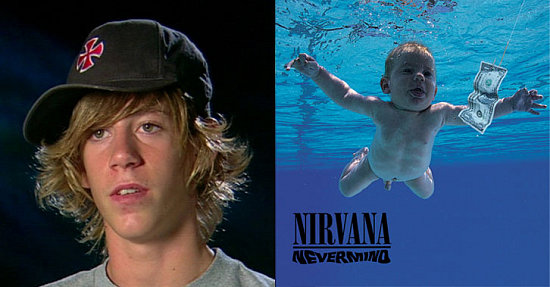
So, Nirvana's album "Nevermind" was a huge album during my formative years. The album cover depicted a naked baby swimming after money. Apparently, that baby is now 17 years old.

Monday, January 19, 2009

Things I will celebrate tomorrow [Bryan]

I will celebrate the first time anyone I have ever voted for has actually become president. My voting so far has been: 1996 for Bob Dole (yup!), 2000 for Gore, 2004 for Kerry -- one loser after another.

I will celebrate a resurrection of my faith in America and the ideal of democracy. I feel like I (we) made a difference this time.

I will celebrate an end to the Bush administration. Bush was a very ordinary man when we need an extraordinary man. He was small-minded, stubborn, incurious, and defensive, easily manipulated by the powerful people around him. He was completely lacking in self-knowledge, completely convinced of his own righteousness, and completely unwilling to take responsibility for any failure (like most of us). Instead of unifying the country in perilous times, he took every opportunity to exploit tragedy for political gain. I no longer hate Bush, like I did (I am ashamed to admit) during the height of the War. He seems a sad little pathetic man now, and I pity him. But Mr. Bush should never, ever, be given any sort of responsibility again.

I will celebrate the beginning of the Obama administration. Obama is the first contemporary politician I have ever admired on a personal level. He is a man who, unlike Bush, has done the hard mental and experiential work necessary to understand himself, to understand the world in which we live, and to understand other people and nations. He won't be perfect, and he may deeply disappoint us, but right now I am ready to trust somebody again.

I will celebrate that people within our own country and across the globe can see themselves in our new president. I do not only mean racially, although that is a big part of it (I continue to hear reports from across the country about how urban schools have been recharged by Obama's election). I also mean that anybody who comes from broken homes, anybody that wasn't born with silver spoons in their mouths, can enjoy this moment. I also mean that geeks, nerds, and, well, readers everywhere can enjoy this moment -- a true intellectual for president! I also mean that basketball lovers everywhere can enjoy this moment, and revel in the basketball loving cabinet that Obama has put together (this sounds corny, but I think basketball, above all other sports, teachers you a lot about team play, grit and determination, and respect for special expertise and excellence).

I think the next few years will be the last chance for America to restore its moral stature and become again a civilized nation. People worldwide are ready to give us one more chance.

Tomorrow can't some soon enough.

Ellie as Poet [Bryan]

I was rummaging through some old boxes yesterday and found some old papers from Ellie's undergraduate days, including from her creative writing classes. I was impressed. Here are two poems.

Aesthetic (1998)

we are trying
to find what is
which is not
to ignore what is
not but
to peel it
peel it away
peel it away and remove
feathers and veils and sequins
aprons and glasses and clothes
hair and skin and fat
muscles and tendons and organs
bones and cartilage and blood
and
Words
to pour out the
glass of mere existence
to find what is
still full
when everything is emptied
to keep eyeballs and
hold them in
our hands
to keep their big round
black spots
looking at us
to see something in
the Blackness


Poetry Is (1998)

Words that tingle
in the fingers,
Words that tickle -- a feather
in the throat;

Words that pulse red
in the chest,
Words that escape
from guarded thoughts;

Words that hollow
out sensations,
Words that live
in one world and another;

Words that track wet prints
on hard, dry sand,
Words that irrigate, flow
through clouded minds;

Words that seek assurance
in obscurity,
Words that blindly hit
on the mark;

Words that bloom beautiful
in fields of ugliness
Words that float answers
in oceans of questions;

Words that cry with the baby
in the night,
Words that hold the bitterness
of the failure of lifetimes;

Words that tell truth --
Poetry is.

What I'll be doing tomorrow [Bryan] -- Upated


I should add that Obama continues to do exactly what he said he would do -- bring the country together. From the New York Times today:
As contenders for the presidency, [Obama and McCain] had hammered each other for much of 2008 over their conflicting approaches to foreign policy, especially in Iraq. (He’d lose a war! He’d stay a hundred years!) Now, however, Mr. Obama said he wanted Mr. McCain’s advice, people in each camp briefed on the conversation said. What did he see on the trip? What did he learn?

It was just one step in a post-election courtship that historians say has few modern parallels, beginning with a private meeting in Mr. Obama’s transition office in Chicago just two weeks after the vote. On Monday night, Mr. McCain will be the guest of honor at a black-tie dinner celebrating Mr. Obama’s inauguration.

Over the last three months, Mr. Obama has quietly consulted Mr. McCain about many of the new administration’s potential nominees to top national security jobs and about other issues — in one case relaying back a contender’s answers to questions Mr. McCain had suggested.
From the Sunday Times:
From the shallow brittleness of George W Bush to the supple strength of Obama is a revolution in temperament and style not seen since Jimmy Carter gave way to Ronald Reagan 28 years ago. It signals the kind of administration that now looms before us: a conciliatory, inclusive, pragmatic form of liberalism. It’s a liberalism eager to learn from the insights of conservatives, and it is pioneered by a president-elect shrewd enough to know that generosity of spirit means more leverage and influence, not less....

We cannot know whether he will succeed, whether partisanship and America’s culture war will slowly eat him up, or whether in government, as he makes decisions with winners and losers, his aura will evaporate. But what we can say is that, so far, he shows every sign of meaning what he said about leaving that divisive, destructive froth behind. Just reading the papers every morning, we see every sign that the gravity of the crisis his predecessor bequeaths him makes this necessary.

The Washington establishment still doesn’t know quite what to make of him. For almost two decades the town has been divided ideologically and culturally — red and blue, neoliberal and neoconservative — shying and plunging in mood swings and feuding. For 16 years, under the guidance of political hatchet men such as Bill Clinton’s Dick Morris and Bush’s Karl Rove, these divisions have been seen as ways to wedge your way to short-term political advantage, to exploit American difference for electoral or PR gain.

The press learnt that cynicism was the only reliable guide to understanding politics and that world-weariness was the same as wisdom. That fear of seeming naive was what inhibited many in the press from greater scepticism about Saddam’s alleged arsenal in the run-up to the Iraq war.

It was an emotionally familiar and comfortable rut. The baby-boomer generation, reared and suckled on post-Vietnam divides, staged their battles like bitter spouses after years of a failed marriage who never really planned on divorce. Now, with this first post-boomer politician, the children who witnessed their parents’ endless fighting have taken over. And it’s the children who seem like adults.

Take a few largely symbolic things that Obama has done since November 4. He gave his chief rival and fierce competitor, Hillary Clinton, the biggest job in his government. He reached out to John McCain, his opponent in the autumn campaign, and will hold a dinner in McCain’s honour soon. He asked a powerful evangelical voice, Rick Warren, to give the inaugural invocation.

Last week he dined with a group of Republican columnists who endorsed his opponent. The dinner was at the home of George Will, the closest America gets to a Tory mind. He did this before he talked to any journalists who had actually supported him. At the Pentagon, Obama has asked Bush’s appointee, Robert Gates, to stay on. He asked Mark Dybul, Bush’s only openly gay appointee, to remain as global Aids co-ordinator. This is not Karl Rove’s America. In so many ways, it symbolises its undoing.

Obama acts like a kind of antacid to the American stomach. He has walked through the churn of racial and cultural and religious polarisation and somehow calmed everyone down.

Last spring he faced his biggest crisis — the exploitation by the Republican right of his incendiary former pastor Jeremiah Wright, a man whose penchant for polarisation was pathological. At a moment of extreme emotion and political peril, Obama found a way to give a speech that remains the greatest of recent times, to remind Americans of their complex and painful racial past, and not to condescend or cavil. The intellectual achievement of the speech was impressive enough — sufficient to provoke Garry Wills, the Lincoln scholar, to compare it to the Gettysburg address. That Obama wrote and delivered it as he heard in his ears every racial stereotype that had pummelled his psyche for his entire life bespoke an emotional maturity that still shocks....

He doesn’t charm like Clinton did and Bush tried to. Unlike both men, but especially Clinton, he appears to have no need to be loved by everyone in the room. He often finds it hard to disguise how tired he feels. He is capable of evoking enormous inspiration, but he has yet to be able to hide it when he is bored. There is a wryness to his conversation and a dryness to his humour, both of which are sustained by an intellect of power. The revered liberal jurist Larry Tribe has said that in decades of teaching at Harvard Law School, he has never had a cleverer student than Obama. I don’t think he’s exaggerating. Intellectually, Obama is in Bill Clinton’s league. But what he has over Clinton is emotional intelligence to buttress his grasp of policy.

What he gets, what he seems to intuit, is how to make others feel as if they are being heard. This is simple enough in theory but hard to pull off consistently in practice. His model is to figure out what another person needs and, if it helps Obama to get what he wants, to provide it.

He sensed that Hillary Clinton needed independent respect in defeat. He couldn’t give her the vice-presidency, which she desperately wanted, because it would have given her a dangerous rival power base if they succeeded. So he offered her the next best thing, and she, unlike her husband, was smart enough to say yes.

He realised that Rick Warren was an egomaniac and wanted some kind of platform, so he gave him a largely symbolic role at the inauguration and allowed Warren to preen. He knew that what Washington pundits really craved was not the truth, but a sense of their own importance. So he let them throw him a dinner party.

He sensed that McCain was in deep emotional withdrawal after his horrifying and crude descent into raw partisanship last autumn. And so he celebrated the old, bipartisan McCain and asked for his support in the Senate.

This is not typical for politicians in any climate and era. In the post-Clinton, post-Bush divide of the US, it’s a shock of sorts, and one most Washingtonians have yet to absorb. More shocks, I suspect, are to come, as people begin to realise that the new politics Obama promised is actually more than just a marketing device for a campaign....

Wednesday, January 14, 2009

How a president acts [Bryan] -- Updated

Wednesday, January 07, 2009

Recent pictures [Bryan]

I must say, kids look really cute when they are all bundled up.

Andrew's third birthday party

Nora recently lost her first tooth

Goofy Andrew


Nora's first piano recital


Family Kazoo recital

Friday, January 02, 2009

The Incarnation [Bryan]

A interesting after-Christmas reflection, from Catholic Andrew Sullivan:

The reason I call myself a Christian is not because I manage to subscribe, at any given moment, to all the truths that the hierarchy of my church insists I believe in; let alone because I am a good person or a "good Catholic." I call myself a Christian because I believe that, in a way I cannot fully understand, the force behind everything decided to prove itself benign by becoming us, and being with us. And as soon as people grasped what had happened, what was happening, the world changed for ever. The Gospels - all of them, including those that were rejected by the early Church - are mere sketches of a life actually lived, and an experience that can never be reduced to words or texts or doctrines. And the world as it was - as it still is - was unable to tolerate this immense occasion; and so Jesus was executed and the life more in touch with divinity than any other life was ended abruptly, when it was still achingly young. The existence of such a life was both so wondrous that it changed everything; and also so terrifying it had to be snuffed out.

The point of this incarnation was surely not to construct a litany of offenses by which we are to judge our own lives at any moment, to force us to thrash and writhe in a constant ordeal of self-criticism and guilt. The point was merely to be with us; and by being with us, to show us better how to be human, how better to embrace our lives by accepting the divine around us and inside us. By letting go, we become. By giving up, we gain. And we learn how to live - now, which is the only time that matters.

Thursday, January 01, 2009

Overheard at the Warnick house [Bryan]

My mother-in-law, after playing "Hungry Hungry Hippos" for the first time remarks:

"It is kind of a primitive game, isn't it."

Frost/Nixon [Bryan]

Being something of a political junkie, I was excited to see Frost/Nixon, a dramatic retelling of the interviews between David Frost and disgraced ex-president Richard Nixon in 1977. The film, however, exceeded even my wildest expectations. At the end of the movie, a collective "wow" seemed to rise up from the movie theater.

Just think of this: The movie is about a political interview. These things happen all time time, and they are among the most boring events on television. Yet, Ron Howard tells the story so that the audience is hanging on every word, every nuance, every expression, every turn of phrase. The interview is depicted as a moment of high personal drama for both Nixon and Frost, and the movie makes it seem as if justice itself hangs in the balance.

The film has a human touch the moved me immensely. Nixon is shown as a tormented figure, haunted by personal and political demons. He is depicted as a figure always trying to fit in with an elite crowd that would never accept him. He strives to find that last shred of dignity in the life of the monster that he had become. Frank Langella's performance as Nixon is breathtaking. I continued to loath Nixon's crimes, and the movie certainly does not exonerate him. But at the same time, I came to see myself in him as a somewhat defensive, insecure, paranoid, and imperfect person. Langella turns Nixon into an everyman, which is quite an achievement. The rest of the cast is also brilliant.

The movie, of course, like most historical films, is not perfectly true to history. It exaggerates Nixon's sympathetic side, the extent of his "confession" in the actual interviews, and the complicity of both Frost and Nixon in manipulating the made-for-TV event. There was a sentiment about the movie, however, which rang true to me from what I know about Nixon. And from what little I understand about human nature.

So, you should go see it. It is, I believe, a remarkable achievement.